
Federal Custody Release Scope
ICE and the U.S. Marshals Service perform different jobs. ICE's Online Detainee Locator System covers qualifying people in current ICE or certain CBP custody and has a short recent-release reach. USMS holds and transports many federal pretrial prisoners, but it owns no detention facilities. It can use federal, state, local, or private beds. Neither agency is interchangeable with the Federal Bureau of Prisons, which primarily handles sentenced federal prisoners.
The Harper County Sheriff's detention function can be the starting point without being the final custodian. The official sweep found no ICE contract or dedicated USMS designation for the jail. Do not claim one. A specific person's booking sheet may nevertheless show release to ICE, USMS, or another agency. That destination field, not speculation about the jail, determines the next search.
| Harper County record | Custody meaning | Next channel |
|---|---|---|
| Released to ICE | Interagency transfer, not community release | ICE ODLS and DRIL |
| Released to USMS | Federal pretrial transport or detention may continue | PACER, federal clerk, and case agency |
| Federal sentence | BOP custody may follow USMS detention | BOP inmate locator |
| Community release | Named agency's custody ended, subject to court terms | Agency record and court release order |
Check ICE Release Records
The ICE Online Detainee Locator System is the public search for qualifying current immigration custody. ICE attorney resources also describe coverage for people released from ICE custody during the prior 60 days. That limited window makes ODLS useful soon after an event, but it is not an archive of all past immigration detention or release.
Search with the nine-digit A-number and country of birth when the number is known. Follow the interface instruction to add leading zeros if necessary. The biographical route uses exact first and last name plus country of birth, with a birth date where offered. ODLS does not search children under 18. Exact spelling and country data matter.
- Obtain the Harper County release code and destination agency before choosing a federal system.
- For ICE, collect the A-number, country of birth, exact legal name, spelling variants, and date of birth.
- Search ODLS by A-number first, then try the biographical route if needed.
- Record the displayed custody or location information and the date of access.
- If the result is absent or unclear, call ICE DRIL and explain the specific-person custody question.
- Pair the agency result with the court record and Harper County transfer transaction.
A no-result is inconclusive. The spelling may differ. Data can lag. Safety exclusions can limit a result. The person may be under 18, held by another agency, outside the 60-day released window, or never entered ODLS coverage. Never translate an empty screen into “released” without another official record.
ICE Release Record Follow-Up
The ICE Detention Reporting and Information Line, commonly called DRIL, is the follow-up channel for detention questions that ODLS does not resolve. The line is 1-888-351-4024. Researched hours are Monday through Friday, except holidays, from 8 a.m. to 8 p.m. Eastern. Language assistance is available.
ICE Detention Reporting and Information Line
Phone: 1-888-351-4024
Hours: Monday through Friday, except holidays
8 a.m. to 8 p.m. Eastern
Purpose: ICE detention and recent-release follow-up
Have the A-number or full identifying information ready. Also retain the Harper County booking or case number and the date the Sheriff recorded the transfer. DRIL can address the ICE side of the custody path. It does not certify the county's local release timestamp or explain a separate state case.
The official ICE detention resources describe ODLS coverage and access. When a person has moved beyond the locator's recent-release window, an ICE records request, immigration court record, or case-specific authorized inquiry may be needed. Define the event and date range rather than asking an agency to assemble a new narrative.
U.S. Marshals Release Records
The U.S. Marshals Service manages federal pretrial custody and prisoner transport. It owns no detention facilities, so a person under USMS authority can be physically housed in a local, state, federal, or private bed. A disappearance from a Harper County custody record can therefore mark transport rather than release from government custody.
USMS offers no general public historical released-person locator. Its custody and detention page explains the agency role, but it is not a name search. The durable public path is the federal criminal docket, including detention orders, release orders, judgments, and later proceedings. If the person received a federal prison sentence, the BOP locator becomes the next custody system.
- USMS custody
- Federal pretrial holding or transport under Marshals authority, often in another operator's bed.
- Detention order
- A federal court order requiring custody while the case proceeds.
- Release order
- A court order authorizing release under its stated conditions.
- Agency transfer
- Movement from one custodian to another, not a community release.
A county entry that merely says “federal” is too broad. Ask whether the destination was USMS, ICE, BOP, or another named authority. The choice controls the correct locator and record request. When Harper County cannot disclose a destination field, the federal docket and known case number may still identify the responsible agency.
Federal Court Release Records
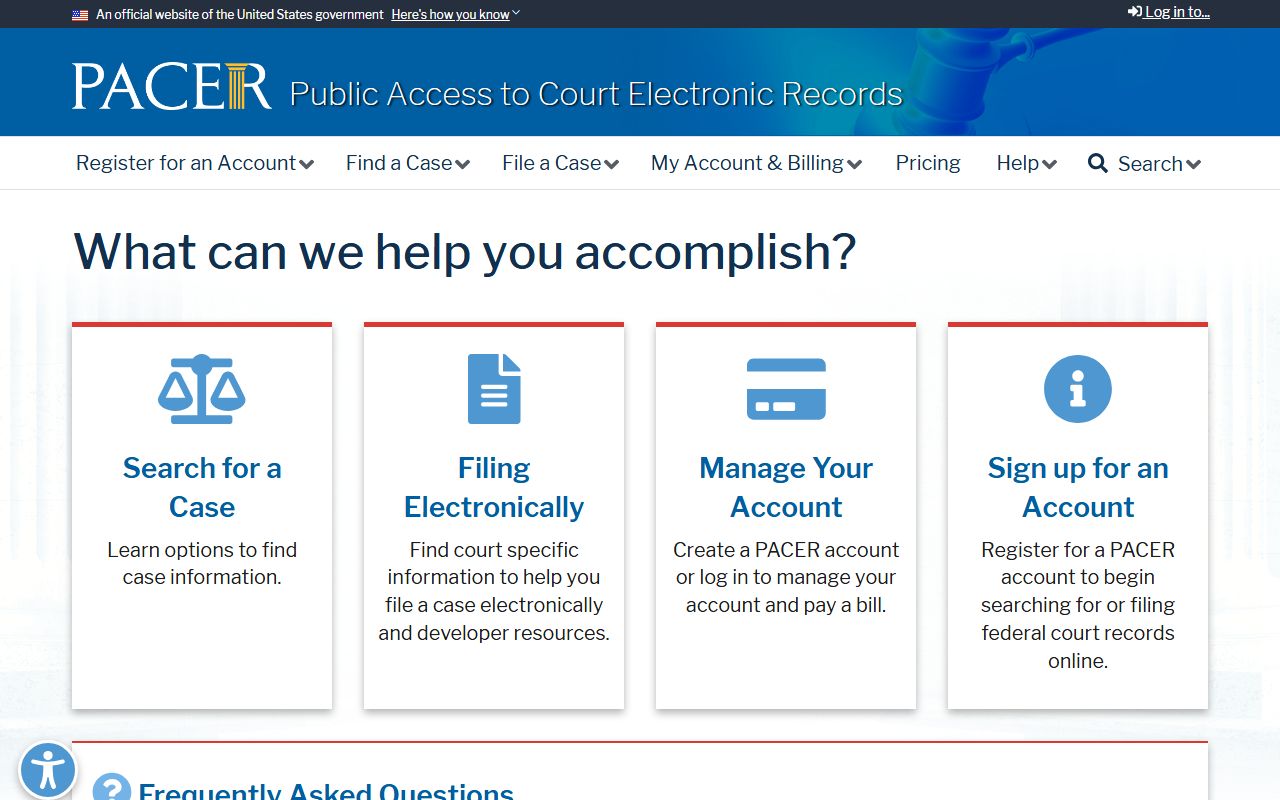
The PACER federal court portal is the central public docket route for federal cases. Search the appropriate United States District Court and match the defendant carefully. Docket entries can lead to an initial appearance, detention hearing, bond or release order, plea, judgment, sentencing, revocation, or later supervision proceeding.
The official PACER entry page provides the court-record route for a Harper County federal custody question.
A court order explains legal authority, while the holding agency records the physical movement. Neither source should be substituted for the other.
A release order does not prove the exact time staff carried it out. An agency transaction does not explain every condition imposed by the judge. Read both when available. If a sentence sends the person to BOP, use the Federal Bureau of Prisons release lookup for the later institution and release date.
PACER also helps when USMS has no public name locator. The docket identifies the court, case number, counsel, and filed custody orders. A sealed filing or limited docket text may require a request through the federal clerk or an authorized case channel. Do not infer release solely because a public document is unavailable.
Harper County Federal Release Transfers
The Harper County Sheriff's Office should be asked a precise first question: did the person leave county custody for the community or for a named agency? Call 620-842-5135 for current operational confirmation. For documentation, use the Harper County records-request channel and ask for the booking and release record, release date and time, release code, releasing authority, and transfer destination.
The county custodian can respond with existing county records. It need not create a new report. Harper County states that it provides records or a written response within three business days, although that response can explain that more time, clarification, or payment is needed. Reasonable charges may reflect actual access, copying, and staff time. Ask for an estimate before work begins.
The Harper County District Court page helps explain a related Kansas case, bond order, dismissal, state sentence, or warrant. It does not own the federal docket. A person can have state and federal matters at once, so one release order may not end the other authority.
Keep separate timestamps for county exit, federal receipt, federal release, and any later transfer. If the Harper County record says ICE or USMS, the local event ended Sheriff custody. Only the receiving system can show what followed. This is the key safeguard against calling a transfer a community release.
Federal Custody No-Result Checks
An ODLS no-result and the lack of a USMS public locator require a fallback sequence. First, verify the person's identity and the destination shown by Harper County. Next, search the federal court docket. Then use the correct agency contact or records process. If a federal sentence appears, search BOP by register number. If the county record instead names another Kansas jail or KDOC, leave the federal path and follow that receiving system.
| No-result reason | Useful next check |
|---|---|
| Name or country mismatch | Retry exact spellings and A-number route |
| ICE release older than 60 days | Agency records and immigration or federal court file |
| USMS pretrial custody | PACER detention or release order |
| Federal prison sentence | BOP locator by register number |
| County transfer named another agency | Receiving agency's locator or records office |
Save the date each system was checked. A status can change, and a short-window locator can stop returning a former detainee. A dated screenshot or note shows what the public system displayed at that point, but an agency record is stronger when the event must be documented.
Confirm Federal Custody Release
A complete timeline answers three distinct questions. Who physically held the person? What legal order allowed or required the movement? Where did the person go next? Harper County, ICE, USMS, BOP, and the courts can each own one part of that answer.
ICE release does not decide a separate criminal case. USMS movement does not show that federal detention ended. BOP Released means BOP custody ended, but federal supervised release or another authority may continue. A county transfer record likewise proves only that Harper County's hold ended through delivery to the named recipient.
The Harper County released-inmate search and records path connects federal results with county and Kansas systems. Use it when the destination remains unclear or the person may have moved between authorities. Preserve exact agency labels. Avoid replacing them with a broad claim that the person was simply “free.”
Note: When two official systems disagree, compare their update dates and ask each agency to explain only the record it owns.